U-Haul
- 3.0
- Rating
- 5.00M
- Installs
- Free
- Price

 Analysis by App-foxy
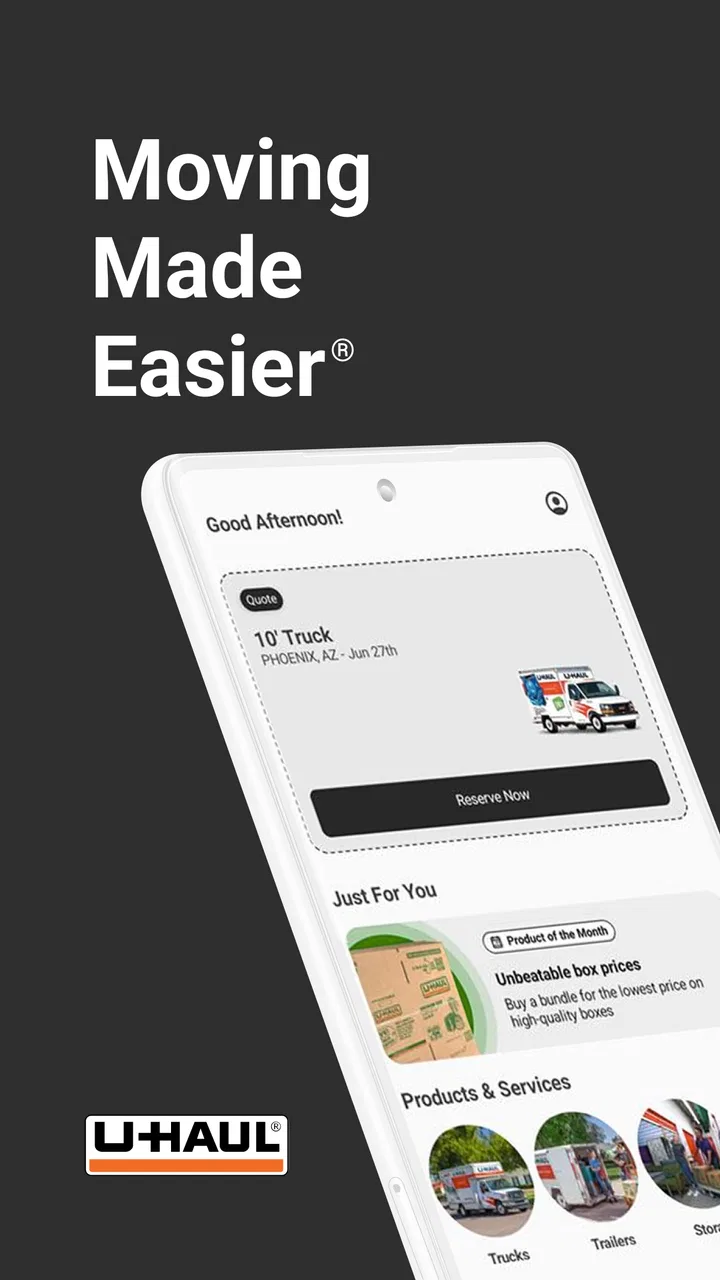
Moving is usually less about one dramatic task and more about keeping many small decisions under control. That is where I found U-Haul useful. This free Travel & Local app from U-Haul International brings the company’s moving and storage services into one mobile starting point, so I can plan around equipment, locations, reservations, and storage needs without treating each step as a separate search.
I would not describe it as a complete moving planner for every kind of relocation. It is much more focused: it helps people who are already considering U-Haul turn a general moving plan into practical arrangements. That focus is its main strength, but it also explains why someone comparing many independent rental companies may prefer a broader alternative.
One place to begin the U-Haul process
The app’s most important capability is the way it connects a move with U-Haul’s rental and storage services. Instead of starting with a web search, switching between maps, and trying to remember which location offered what, I can use the app as the first step for checking the options relevant to my move.
You May Also Like

 Blood Strike: 2.5 Anniversary
Blood Strike’s Loadouts Turn Every Drop Into a Tactical Gamble
A close look at Blood Strike’s custom loadouts: how fast access to signature weapons reshapes its battle royale rhythm, rewards preparation, and narrows the gap between fights.

 Pandora - Music & Podcasts
Pandora’s Music Is Easy to Start, but Harder to Recover
Pandora’s strength is its low-effort path from a seed to a station. Its weak spot is how much confidence it asks you to place in connection, setup, and quiet recovery.

 8 Ball Pool
 Is Built on Rivalries, Rematches, and Routine
A close look at the rivalries, rematches, shared routines, and unanswered safety questions that turn a quick pool match into a persistent mobile community.

 Samsung Music
’s Quiet Strength Is Playing What You Already Own
Its reach comes less from spectacle than from dependable access to a personal library. That simplicity is both the app’s strongest retention engine and its ceiling.

 AccuWeather: Weather Radar
AccuWeather Review: A Quick, Clear Forecast for Everyday Decisions
For everyday plans, the best forecast is the one you can understand quickly. AccuWeather makes rain timing, radar, and local conditions easy to act on, with a few trade-offs.

 Hill Climb Racing
Why Hill Climb Racing Still Turns Crashes Into One More Run
A tiny car, a bumpy hill and one more upgrade: Hill Climb Racing keeps resurfacing because its simple chaos makes every near-miss feel personal.
More From Our News Desk



That sounds simple, but it matters during a stressful relocation. A move often involves a vehicle, a pickup location, a return plan, and possibly temporary storage. Keeping those decisions close together makes it easier to notice practical conflicts before moving day. For example, a convenient pickup point may not be the most sensible choice if the return arrangement or storage location creates extra driving.
The app is not valuable because it replaces every conversation with a rental location. Its value is that it gives me a more organized way to prepare before I call, visit, or finalize anything. I can use it to narrow down what I need, then confirm the details that matter most for my particular route and schedule.
That distinction is important for expectations. I would use this as a planning and service-access tool, not as a full inventory manager for boxes or a shared household checklist. If my main need is to label furniture, assign tasks to family members, or track packing progress, a dedicated moving organizer will be better. If my main need is arranging U-Haul-related services, this app is more directly relevant.
How the workflow feels on a real move
In practice, I would begin by thinking through the move before tapping through the app. I need to know whether I am moving locally or over a longer route, roughly when I need equipment, whether storage is part of the plan, and how flexible I am about location. The app can support the search, but it cannot make an unrealistic moving schedule realistic.
A useful workflow is to check locations early, compare the practical choices, and keep a written note of the details I intend to verify. I would record the pickup and return information, the timing, and any storage arrangement rather than assuming that a screen viewed days earlier is enough. This is especially helpful when plans change, because moving decisions are often made by several people and not everyone sees the same information.
One non-obvious benefit is that the app encourages me to consider the whole journey rather than only the nearest branch. The closest location may be convenient for pickup, while a different arrangement may make more sense for a one-way trip or a move that ends near storage. I would compare travel time, loading access, and the return plan instead of choosing purely by distance on a map.
Another practical tip is to use the app before packing is finished, not only on the day I need the vehicle. Early planning gives me time to rethink the amount of space I need and to identify whether temporary storage belongs in the plan. It also reduces the chance of making a rushed choice because the original arrangement no longer fits the actual volume of belongings.
I would still double-check important details with the selected location or through the final reservation process. A mobile interface is convenient, but moving arrangements can depend on timing, availability, vehicle type, and local handling. The app helps me organize the request; it should not encourage me to skip sensible confirmation.
A realistic everyday scenario
Imagine I am leaving an apartment at the end of a lease but cannot move directly into the next home. I need to get furniture out on time, keep it somewhere temporarily, and complete the final move later. Without a central starting point, I might search separately for a truck, a nearby facility, and directions between them. That creates several opportunities for mismatched dates and unnecessary driving.
With the app, I would begin by looking at U-Haul options around both ends of the move. I would think about whether pickup near the old apartment is more important than proximity to the storage location, then consider how the second trip will work. The useful insight here is not simply “find a truck.” It is to treat storage as part of the route and schedule, rather than as an unrelated backup plan.
I would then prepare a short checklist outside the app: the date I must leave the apartment, the date I expect access to the new home, the approximate number of large items, and the people available to load. That checklist helps me judge whether the arrangement shown in the app is practical. It also gives me clear questions if I need to contact a location.
For a family move, I could use the app while one person handles packing and another handles logistics. The app does not become a shared project board, but it can serve as the common reference point for the U-Haul portion of the plan. That division of labor is useful because it keeps equipment decisions from getting lost among packing conversations.
Where it saves time and where it does not
The biggest time saving comes from reducing the number of separate starting points. I can begin with the provider I am considering instead of searching the general internet for every moving-related service. That is particularly convenient when I already know I want U-Haul equipment or storage and do not need a neutral marketplace to compare every company at once.
However, the app does not remove the work of estimating a move. I still need to decide what is being transported, how much help is available, and how much flexibility I have. A poor estimate can lead to a frustrating experience even if the app itself is easy to use. I would rather spend extra time measuring large furniture and checking the route than rely on a quick guess made from a phone.
The app is also less compelling when I am only looking for general advice. Someone who has never moved before may need a broader guide covering packing materials, lifting technique, insurance questions, parking, and building rules. This app can be part of that process, but it should not be mistaken for a complete education in moving safely.
The tradeoff between convenience and provider focus
The clearest tradeoff is that the app is designed around U-Haul. That makes the experience more coherent if I want U-Haul, but it limits the comparison space. A general rental marketplace may be better when price, vehicle style, or local availability matters more than staying within one provider’s system.
I also would not use it as my only source when a move has unusual requirements. Large appliances, restricted parking, narrow streets, long loading distances, or a tight building reservation can change the practical answer. In those cases, the app can help me start the process, while direct confirmation and local knowledge remain important.
There is a second tradeoff in keeping the experience simple. A focused service app is easier to approach than a large moving dashboard filled with planning tools, but it may leave me wanting more organization once the move becomes complicated. I would pair it with a notes app, calendar, or dedicated checklist for deadlines and household tasks. That is not a flaw so much as a boundary: this is a U-Haul service companion, not a complete command center for the entire relocation.
Its average rating is 3.3 from around seventeen thousand ratings, with roughly eight and a half thousand written reviews. I read that as a reason to keep expectations practical rather than assuming every user will have a perfectly smooth experience. The rating does not make the app unusable, but it suggests that convenience can depend on the specific task, device, location, and stage of the moving process.
Who benefits most from using it
The strongest match is someone who has already chosen U-Haul or is seriously considering it. That person can use the app to bring vehicle and storage planning closer together, check options earlier, and avoid repeatedly starting from scratch. It is also useful for people who prefer handling logistics from a phone instead of making an initial trip to a location.
It can be especially helpful for a first apartment move, a local household relocation, or a temporary storage situation where the main challenge is coordinating timing. I like it for these cases because the app gives the move a practical starting structure without forcing me to build a complicated system before I know what I need.
People managing a move for relatives may also gain from it. I would use the app to investigate arrangements while keeping a separate written record that can be shared with the person moving. That avoids a common problem in which one family member knows the pickup plan but another person is responsible for loading, access, or returning equipment.
On the other hand, I would skip it as a primary tool if I am comparing several rental brands, hiring a full-service moving company, or looking for detailed packing and inventory features. A neutral comparison service or a dedicated moving planner would serve those goals better. The app makes the most sense when its provider-specific focus is an advantage rather than a restriction.
Compatibility, cost, and everyday accessibility
There is no purchase price to get started, and the content rating is Everyone, so the app is approachable for ordinary household planning. It was released on September 20, 2016, and the current version is 3.9.1. It requires Android 8.0 or later, which means anyone using an older Android device should check compatibility before making it part of a time-sensitive move.
The app has passed five million installs, so it is not an obscure utility that only a small group has tried. Still, popularity does not guarantee that it will fit every moving situation. I would install it before I need it, test the basic flow, and make sure my phone and account setup are ready while I still have time to use another route if necessary.
Because the app is free, the real cost question is not the download. It is whether using a provider-focused tool helps me make a better moving decision. If it saves me from a poorly coordinated pickup or unnecessary trip, it earns its place. If I am only browsing the entire market, the time may be better spent with a comparison tool that shows multiple providers together.
My recommendation after using it
I see U-Haul as a practical first step for a U-Haul-centered move, especially when storage and transportation need to be considered together. Its best effect is organizational: it helps turn a vague plan into a set of location and timing decisions that I can review before moving day.
I would recommend it to a friend who already expects to use U-Haul, but I would also tell that friend to keep a separate checklist and confirm the details that could affect the actual move. The app can make the search and preparation less scattered; it cannot estimate belongings, solve building restrictions, or replace judgment about routes and schedules.
The right way to use it is as the logistics starting point, not the entire moving plan. For that specific job, the free app is useful and easy to justify. For broad price comparison, detailed household organization, or full-service moving advice, I would choose an additional tool instead of expecting this one app to handle everything.
FAQs for U-Haul
01What features does the U-Haul app offer?
The U-Haul app provides a comprehensive suite of features to facilitate your moving and storage needs. You can reserve trucks, trailers, and storage units, manage your reservations, and even access a live chat for support. Additionally, the app offers a location finder, cost estimator, and moving tips to streamline your experience.
02Is the U-Haul app available on both Android and iOS?
Yes, the U-Haul app is available for download on both Android and iOS platforms. You can find it on the Google Play Store for Android devices and the Apple App Store for iOS devices. This ensures that users across different mobile operating systems can access its features seamlessly.
03Does the U-Haul app require an internet connection?
While certain features of the U-Haul app, such as location searching and live chat support, require an internet connection, other functionalities like reviewing existing reservations may work offline. However, for a full and uninterrupted experience, it is recommended to use the app with an active internet connection.
04How secure is my information on the U-Haul app?
The U-Haul app employs robust security measures to protect your personal and payment information. The app uses encryption to safeguard data transmission and complies with industry standards for data protection. Users are encouraged to keep their app updated to benefit from the latest security enhancements.
05Are there any fees associated with using the U-Haul app?
The U-Haul app itself is free to download and use. However, fees apply for services like truck rentals, storage, and other offerings you book through the app. The app provides a cost estimator to help you understand potential charges before completing a reservation.
Pros
- User-friendly interface for easy navigation.
- Wide variety of rental options available.
- Real-time tracking of rental vehicles.
- Convenient 24/7 roadside assistance.
- Flexible reservation modifications.
Cons
- Occasional app crashes reported by users.
- Limited customer support response time.
- Inconsistent pricing information displayed.
- Requires strong internet connection.
- Some features are region-specific.

U-Haul
Gallery